Hillview Manor – Case Study (3 Investigations)
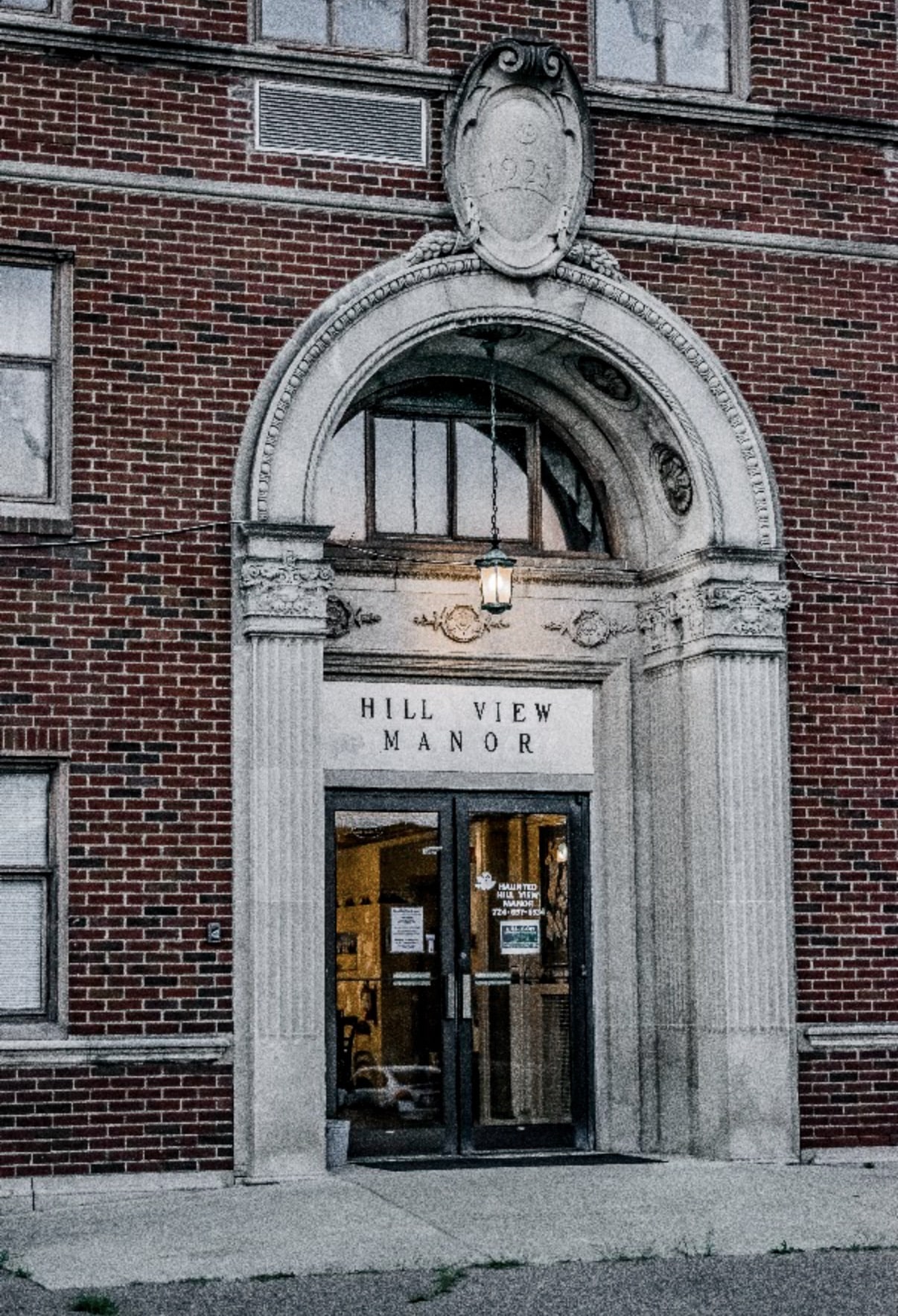
Hillview Manor Case Case File
New Castle, Pennsylvania
Three Investigations: 2017, 2018, and 2022
Introduction and Overview
Some locations leave us with enough questions that a single investigation never feels like the end of the story.
For Iron City Paranormal, Hillview Manor in New Castle, Pennsylvania, became one of those locations. Across three investigations spanning five years, we returned to the former institutional property to document reported activity, revisit familiar areas, and see what our equipment and observations might reveal on different nights.
Our first investigation took place on May 7, 2017. We returned on August 11, 2018, and our third visit took place on June 10, 2022. Each investigation had its own circumstances, experiences, and evidence. Together, they provide an opportunity to examine Hillview Manor beyond a single night’s activity and consider what, if anything, appears to recur across multiple visits.
Hillview Manor is already surrounded by stories, reported experiences, and claims of unexplained activity. Those accounts provide context, but they are not conclusions in themselves. When investigating a location with an established reputation, it is especially important to distinguish what we have been told from what we personally observed, what our equipment recorded, and what can reasonably be established through review.
Rather than treating every unexplained sound, equipment response, or visual impression as proof of paranormal activity, we will examine the observations in context. We will compare locations across our three visits, highlight recordings and images worth reviewing, and acknowledge where the available evidence leaves questions unanswered.
This is not simply a collection of the most unusual moments from Hillview Manor. It is a record of what our team documented, how those observations compare across multiple investigations, and where careful analysis must take precedence over assumption.
Three investigations. One location. A record worth examining.
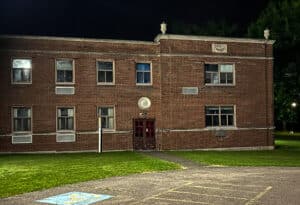
Historical Background: From County Home to Hillview Manor
To understand the context surrounding our investigations, it is important to begin with the building’s history before considering the stories associated with it.
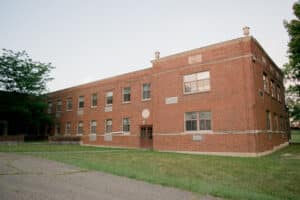
According to the historical account included in our original 2022 investigation report, the institution began in 1926 as the Lawrence County Home for the Aged. The original facility was reportedly designed to accommodate approximately 20 residents. It served people who, because of age, disability, mental illness, or circumstances within their families, required care that they could not readily receive elsewhere.
The original property was described as a largely self-sufficient operation. In addition to the main building, the grounds reportedly included a working farm and garden, laundry facilities, vocational spaces, lounges, and other amenities intended to support daily life. The property was more than a place where people lived. It was an institution responsible for housing, caring for, and managing the everyday needs of its residents.
Over time, the population reportedly grew well beyond the facility’s original intended capacity. The institution also underwent changes in administration and purpose. Our 2022 report describes a transition toward state oversight, followed by its development into a skilled nursing facility and the construction of additional space, including a three-story North Wing in 1974.
The name Hillview Manor was adopted in 1977, according to that same account.
These changes are important when considering the property’s history. The building’s use evolved over several decades, and its residents, staff, layout, and daily routines would have changed along with it. Understanding those changes provides a more useful starting point than assuming that every room or reported experience belongs to a single period in the building’s past.
The Stories Surrounding the Property
Hillview Manor’s reputation also includes more troubling stories about the treatment of residents, overcrowding, and alleged burials on the grounds. These accounts have become part of the broader narrative surrounding the location and are frequently connected to discussions of its reported paranormal activity.
However, stories repeated about a historic property should not automatically be treated as established historical fact. Claims about unmarked graves, burial practices, specific deaths, or the treatment of individual residents require supporting documentation. Where records are incomplete or a claim cannot be independently verified, that uncertainty needs to remain part of the story.
For this case file, historical claims will serve as context rather than as a predetermined explanation for our findings. A reported name during an investigation does not, by itself, establish the identity of a former resident. Likewise, a sound or visual impression in a particular room does not confirm a story associated with that space.
Our goal is to examine the documented history alongside our investigation records without forcing one to fit the other.
Hillview Manor closed in 2004, bringing its institutional use to an end. Its history, surviving structure, and reputation have continued to draw attention from people interested in the building and its reported unexplained activity.
For Iron City Paranormal, the question was not simply whether Hillview Manor had a reputation for being haunted. It was what we could document when we investigated the property ourselves, what happened when we returned, and how the evidence from those visits compared.
That is where the investigation record begins.
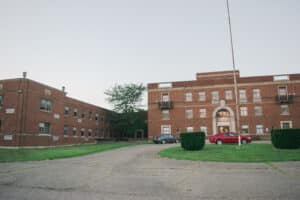
Our Investigation Timeline
May 7, 2017 | First Investigation
Our initial investigation established the starting point for our team’s experiences at Hillview Manor. We explored several areas of the building, documented reported responses, and recorded observations that would provide a point of comparison for our return.
August 11, 2018 | The Return
Our second visit gave us an opportunity to revisit the location and compare our new observations with the experiences documented the previous year. We again recorded activity in several areas, although the nature and interpretation of those observations varied.
June 10, 2022 | The Third Investigation
Our third investigation took place during a return visit arranged in connection with a bachelorette party. This investigation brought another set of experiences, recordings, photographs, and equipment responses into the growing record. It also allowed us to revisit familiar areas while documenting activity reported in other parts of the building.
The three investigations form the foundation of this case file. In the sections that follow, we will examine each visit on its own terms before comparing the locations, observations, and evidence across the full timeline.
The purpose is not to assume that similar experiences must share the same cause. It is to determine which patterns are genuinely supported by the record, which observations remain ambiguous, and what we can responsibly say about our time at Hillview Manor.
We don’t claim. We document.
Key Locations and Reported Histories
Across our three investigations at Hillview Manor, several locations stood out because of their reported histories, recurring stories, or the experiences associated with them. Some were areas we specifically sought out because of existing accounts, while others drew our attention through sounds, visual observations, or unexpected moments during our investigations.
The stories connected to these rooms helped guide our approach, but they were not treated as proof of who or what might be responsible for any unexplained activity. The following locations provide the context for examining what we experienced and recorded across our three visits.
The Chapel
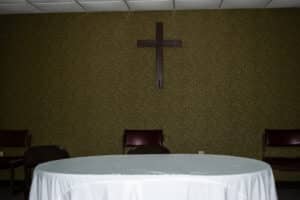
The first-floor chapel was one of the more memorable locations during our early investigations. During our May 2017 visit, the team attempted to communicate with possible occupants of the building through a spirit box, asking questions about the location, the people who might remain there, and whether they were willing to interact with us.
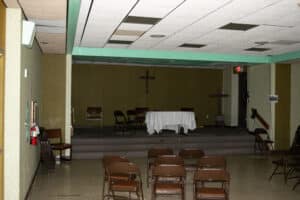
The chapel also became a focal point during our August 2018 return. We again attempted communication, this time recording a number of apparent responses that seemed connected to our questions and introductions. However, not every session in the chapel produced similar results, making it important to examine the recordings individually rather than treating every visit as confirmation of the same activity.
The Atrium
The first-floor atrium was another location that drew our attention during our initial investigation. Our team attempted to encourage interaction using questions and a game involving a chess piece or checkers. During this session, we noted sporadic EMF meter fluctuations and apparent spirit-box responses, including a reference to a team member’s nickname and a response that we interpreted as a request to leave.
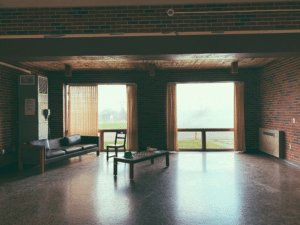
When we returned in 2018, the atrium again became a focus of communication attempts. Several apparent names, numbers, and phrases were recorded while we asked questions and tried to encourage interaction with objects in the area.
These sessions provide an opportunity to compare similar attempts made during separate visits and to consider whether the recordings contain consistent, independently meaningful responses.
Mary Virginia’s Room and Anna’s Room
Mary Virginia’s room, identified in the location’s stories as Room 105, is associated with a former resident who reportedly remained at Hillview Manor until the facility closed in 2004. According to the accounts shared with investigators, Mary Virginia enjoyed beads and stuffed animals, and visitors have reported possible interactions involving these objects.
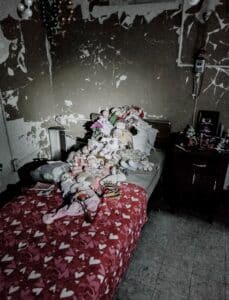
Across our investigations, we did not always receive meaningful responses in this room. Our June 2022 visit, however, produced a more involved session using a flashlight, a Spirit Light, and a Phasma Box. During that session, we recorded apparent responses involving Mary’s name, the lights, and a necklace.
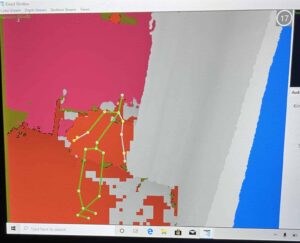
Across the hallway is Anna’s room. Stories about Anna often describe her as being overlooked in comparison with Mary Virginia and suggest that she may try to attract visitors’ attention. During our 2022 investigation, an SLS camera displayed what appeared to be a figure on the bed in Anna’s room, and our team also documented movement involving a birdcage. These observations are examined as recorded events rather than assumed proof of Anna’s identity or presence.
Jeffrey’s Room
Jeffrey is one of the best-known figures in Hillview Manor’s reported haunting stories. Accounts describe him as a former resident who spent much of his life at the facility and is associated with the second-floor Room 208. Stories attributed to Jeffrey include running through hallways, playing with toys left by visitors, and tugging at people’s clothing to get their attention.
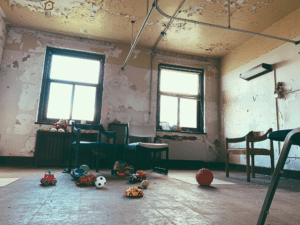
During our May 2017 investigation, we visited Jeffrey’s room but did not document substantial communication there. This is an important part of the record: a location’s reputation does not guarantee activity during every investigation.
Our experiences elsewhere in the building would prove more noteworthy than this particular session, illustrating why we continue to investigate locations based on both reported history and what we can actually document during a visit.
Angelo’s Room and Hallway
Angelo’s room and the surrounding hallway are associated with a particularly disturbing story. According to the account shared with investigators, Angelo was a former resident whose death occurred in a bathroom in this area. His death has been described as a suicide, although some versions of the story question whether another person was involved. We have not independently established those disputed details.
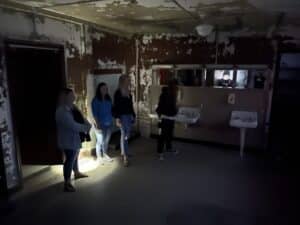
Reported activity in the area includes footsteps, knocks, and shadow-like figures. Some accounts also suggest that attempts to ask about Angelo’s death may be followed by a sudden loss of communication.
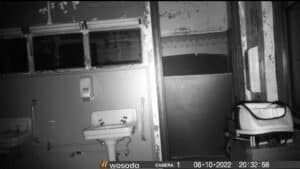
During our June 2022 investigation, we deliberately spent time in this area and positioned a stationary camera toward the doorway associated with the story. Our recordings included footsteps, shuffling sounds, and a raspy sound resembling someone clearing their throat after we asked about the room’s name. A video frame also appeared to show a face-like shape in a mirror.
The location is particularly useful for comparing reported experiences with our own recordings, while remembering that a sound or image alone cannot establish the identity of its source.
The Third-Floor Nurses’ Station and John’s Room
The third-floor nurses’ station sits near the intersection of several hallways, close to the room associated with John Robinson. The story surrounding John describes a death involving a fall from a window. Some versions say he jumped, while others suggest he may have been pushed. These conflicting accounts remain part of the location’s reported history rather than established conclusions.
Stories connected to this area include footsteps, shadows appearing in doorways, and sounds attributed to people moving through the hallways. Other accounts describe John as territorial, sometimes attempting to draw visitors away from his room.
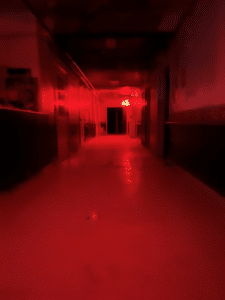
During our June 2022 investigation, this area became one of our main focuses. We followed sounds through the hallways, attempted communication using a spirit box and the ESTES method, and documented experiences that included apparent names, requests to leave, and a possible narrative about someone protecting or hiding money from family members.
Although some of the responses seemed to fit the stories associated with the area, we could not establish a definitive identity for the source of the apparent communication. The evidence therefore needs to be considered alongside the questions asked, the recording conditions, and the possibility of alternative interpretations.
The Embalming Room
The first-floor embalming room was another location of interest during our early investigation. During the May 2017 visit, our team gathered in the room late in the evening and reported hearing sounds described as growls and hisses. We also noted movement involving a rocking chair.
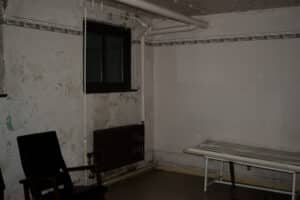
The recordings included sounds that some of us interpreted as words or names in response to questions. Because the session occurred late in the night, when the group was tired, it is particularly important to review the audio carefully and avoid treating an uncertain sound as a confirmed voice.
During our August 2018 return, we attempted additional sessions in the embalming room, both with and without a spirit box. Those sessions did not produce the same level of apparent communication documented in some other areas.
Eli’s Boiler Room
The boiler room in the basement is associated with the story of Eli, a former resident who reportedly became trapped in the area during freezing weather and died from exposure. Accounts describe him as a presence associated with banging on pipes and doors, as well as activity directed toward visitors.
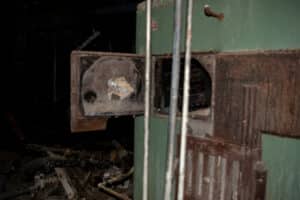
During our June 2022 investigation, this area was newly accessible to the public. We documented shuffling or walking sounds and words produced by an Ovilus device, including “Knife” and “Mad.” We did not record a clear visual manifestation there, and the sounds we captured were limited compared with some of our other sessions.
The boiler room is an example of why we distinguish between the history attributed to a location, the activity reported by others, and the evidence captured during our own investigation.
Hallways and Other Unidentified Areas
Not every experience at Hillview Manor occurred in a room associated with a named individual. Across our investigations, hallways and less prominent rooms also drew our attention through footsteps, knocking, unexplained sounds, and visual observations.
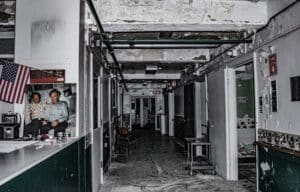
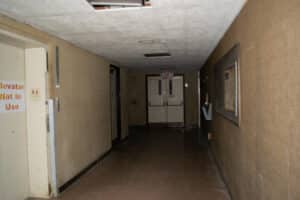
During the May 2017 investigation, we recorded what sounded like bumps and dragging noises in a third-floor hallway, although we could not establish a clear source or identify any direct communication. In June 2022, team members reported a full-body figure in a hallway that was not captured on camera. A separate photograph appeared to show a dark, shadow-like shape in a room.
These experiences are included because they formed part of our investigative record, not because we can conclusively identify them as paranormal. They also remind us that activity reported throughout a building may not always correspond neatly with the stories assigned to individual rooms.
Taken together, these locations form the framework for comparing our three visits. Some areas produced little of note during one investigation and more apparent activity during another. Others became recurring points of interest because of the stories associated with them or the experiences we documented there.
The next section brings the recordings, photographs, video, and personal observations together by location, allowing the evidence from each visit to be examined side by side.
Evidence by Location
Our three investigations at Hillview Manor produced a mixture of apparent spirit-box responses, unexplained sounds, visual observations, equipment activity, and sessions in which little or nothing noteworthy occurred. Looking at these findings together is more useful than treating each unusual moment as an isolated event.
The evidence below is organized by location. For each area, we distinguish what was reported during the investigation from our interpretation of the event. A response that seems relevant to a question can be intriguing, but it does not automatically establish that the source was paranormal or that we have identified a particular individual.
The Chapel
May 7, 2017
The chapel was one of the more notable locations during our first investigation. During a spirit-box session, we recorded apparent responses to questions about the building and the people present.
These included “1963” in response to a question about the year.
“June” when asked for the month.
When asked whether the communicator was friendly, the response was interpreted as “No.”
Finally we heard “Ray” after we asked if they could touch him jokingly.
Later in the evening, a smaller group returned to the chapel after the recording equipment had been turned off. We reported hearing a whisper repeat several of our names and Andrew’s nickname. Because that exchange was not recorded, it remains a personal experience rather than evidence that can be independently reviewed.
August 11, 2018
We returned to the chapel and again recorded apparent spirit-box responses. Some responses appeared to follow questions directed toward the communicator, while others were less clearly connected to the conversation.
These included “Historic” when asked what building we were in.
Several greetings and phrases were heard such as “Hi”
The name “George” was heard here.
The chapel therefore stands out as a location where we reported apparent communication on two separate investigations. However, the recordings rely on interpreting brief sounds produced during spirit-box sessions. They should be listened to in full, with the questions and surrounding audio included, rather than judged solely from selected phrases.
What the evidence may suggest
The repeated reports of apparent responses made the chapel a recurring point of interest for our team. At the same time, the material does not independently establish the identity of a communicator or confirm that the words originated from a spirit. The recorded audio is the strongest basis for evaluating these sessions.
The Atrium
May 7, 2017
During our first investigation, we attempted to encourage interaction in the atrium by asking questions and inviting an apparent presence to move a chess piece or participate in a game. During this session, the EMF meter fluctuated quickly and sporadically. The spirit-box recording also appeared to include Andrew’s nickname, “Kubez.”
This was followed by a response interpreted as “leave” twice.
The combination of equipment activity and an apparent verbal response made the session noteworthy to us. However, an EMF fluctuation alone does not identify its cause, and the recording must be considered separately from the meter activity.
August 11, 2018
The atrium was again one of our more active locations. We recorded a number of apparent responses during spirit-box sessions, including possible names, numbers, and phrases. These included the age of “Sixty.”
There were apparent answers to questions about interaction with a ball as we heard “The ball” twice.
The name “Bob” after we asked directly for their name.
Some of the responses seemed relevant to the questions being asked. Others were ambiguous or could be interpreted in more than one way. We did not establish a reliable identity for the source of these apparent communications.
What the evidence may suggest
The atrium produced apparent communication during both of our early investigations, making it one of the clearest recurring locations in the case file. That consistency is worth documenting, but it should not be confused with proof of paranormal activity. The key question is whether the full recordings contain responses that remain meaningful when reviewed without relying on expectation or the interpretation supplied at the time.
Mary Virginia’s Room and Anna’s Room
May 7, 2017
During our first investigation, we attempted to communicate in Mary Virginia’s room. The session produced limited conversation, although a spirit-box response of both “Lady” and “Mary” were captured here as we tried to figure out who was with us.
We explained that we brought her a gift and that we’d leave it on her bed to which we heard “Great!”
We heard “Somebody else here” after we asked a question about whether Mary was present. At the time, we considered the possibility that another communicator might be associated with the room.
That interpretation was tentative. The response alone did not identify another individual or establish who, if anyone, was communicating.
August 11, 2018
We returned to Mary Virginia’s room and conducted sessions both with and without a spirit box. Our published notes reported no responses or feedback from the recordings or video in this area. This is an important contrast with the apparent response from the first investigation: the same location did not produce noteworthy results every time we visited.
June 10, 2022
Our third investigation produced a more involved session around Mary Virginia’s room and Anna’s room across the hallway. We used a flashlight, a Spirit Light, an SLS camera, and a Phasma Box.
During the flashlight session, the light switched on and off at various points while we asked questions. We interpreted some of these changes as yes-or-no responses, but the device’s behavior alone cannot confirm that a communicator was controlling it. The recording also captured our questions and reactions, which provide useful context for reviewing the sequence.
The Phasma Box produced words and phrases that we interpreted as references to Mary, her necklace, the colored light, and the visitors. This first recording captured “Mary” and “Having a great time.”
We asked Mary to move her favorite color of beads wrapped around her bedpost but since she did not, we asked if she could tell us her favorite color and heard “All types of pink.”
We attempted to gain more information from Mary but she only liked to play with the flashlights as she told us this directly with Flashlight” and “I do” after we told her we understood she liked to play with them.
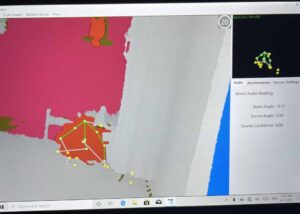
In Anna’s room, the SLS camera displayed what appeared to be a figure on the bed, and a video showed movement involving a birdcage. These are visual observations worth examining, but an SLS figure is a device-generated skeletal representation, not a direct image of a person. The birdcage movement also requires consideration of ordinary physical causes, including contact, vibration, or airflow.
What the evidence may suggest
The 2022 session differed from our earlier visits because it included more sustained interaction attempts and multiple devices. Some responses appeared to relate to the objects and questions in the room. Nevertheless, the evidence does not independently prove that the source was Mary Virginia or Anna. The distinction between an apparent response and a confirmed identity remains important.
The Embalming Room
May 7, 2017
Late in our first investigation, around 4 AM, the group gathered in the embalming room. We reported hearing sounds described as growls and hisses in the room and hallway, as well as seeing a rocking chair move.
During the spirit-box session, we interpreted several sounds as words or names. These included “Death” after a question about what had happened in the room.
“Adam” was heard after we directly asked for their name.
The number “8” was heard after we asked how many people were present.
The late hour is relevant context. Fatigue, background noise, and the difficulty of interpreting brief sounds can affect what listeners believe they hear. We therefore regard these as observations and interpretations from the session, rather than confirmed messages.
August 11, 2018
We returned to the embalming room and conducted sessions with and without the spirit box. Our published notes did not identify any noteworthy responses or feedback from those recordings or the accompanying video.
This difference between visits is worth preserving in the case study. Although the room produced several reported experiences in 2017, the same result was not repeated in 2018.
What the evidence may suggest
The first investigation produced several moments that the team found unusual, but the return visit did not reproduce the same apparent activity. The available record therefore supports describing the embalming room as a location of interest during the first investigation, not as a place where the same phenomena occurred consistently across visits.
The Second-Floor Hallway and Girl’s Bathroom
May 7, 2017
During the first investigation, we attempted spirit-box communication in the second-floor girl’s bathroom. These recordings starting with “Go away” after we asked if they would sing for us since we heard they like singing.
We explained that we were almost out of time but did they have any questions for us. We heard a response of “No” followed by “Go away” and “Leave.”
We also reported a response interpreted as “Green” after asking whether the communicator could interact with the green light on the EMF meter. The light blinked immediately afterward.
These moments were notable because they appeared connected to the questions being asked. However, the recording does not by itself establish whether the responses were externally generated, coincidental, or correctly interpreted.
August 11, 2018
On our return, the second-floor hallway produced a more extensive spirit-box session. The recording included apparent names, numbers, and phrases. This began with “John is here” after we asked directly if Jim or John were with us.
As we continued to push we were told to “Please go.”
At one point, a response appeared to give the date “June 4, 1923” when asked about a birthday.
We also recorded a sliding or scraping sound later in the session.
In contrast, the recordings made in the same hallway without a spirit box did not produce clear apparent communication, although scratching noises were noted in one recording.
What the evidence may suggest
The hallway and bathroom sessions produced apparent responses on more than one visit. The material is particularly useful for comparing spirit-box sessions with recordings made without the device. However, the words heard during these sessions should not be treated as verified biographical information about a specific resident.
John’s Room and the Third-Floor Hallways
May 7, 2017
During the first investigation, we recorded bumps and sounds resembling dragging in a third-floor hallway.
We also noted what seemed to be whispers or voices, although we could not identify a clear response or direct communication from the recording.
We were eventually told to “Go” and “Leave.”
August 11, 2018
John’s room became a more prominent focus during the return investigation. The spirit-box recording included phrases starting with “Get out” and “Go.”
After we asked what they would do if we didn’t leave, we heard “Kill.”
“Run if you can” was heard when we asked why they wanted us to leave.
We then heard “Please help me” following us questioning if there was anything else they’d like to tell us.
The return investigation also included a spirit-box session in the third-floor hallway in which we were told “Not John” which helps establish that this was a different individual than who was associated with John’s room.
June 10, 2022
During our third investigation, the third-floor nurses’ station near John’s room became a focus of further communication attempts. We reported feelings of being watched, possible shadows in the hallways, and apparent spirit-box and ESTES-method responses. Some of the responses seemed to suggest that someone was hiding or protecting money from family members. However, we did not establish a name or specific room connected to that apparent narrative.
Team members also described experiencing a cold, unsettling sensation on separate occasions without discussing it with one another beforehand. This is a personal-experience report rather than an instrument recording, and it cannot independently establish the cause of the sensation.
What the evidence may suggest
The third-floor areas produced different types of observations across our visits, including unexplained sounds, apparent spirit-box responses, and personal experiences. The repeated focus on this part of the building makes it a significant part of the case file, but the available evidence does not confirm that all of these events came from John or from one source.
Eli’s Boiler Room
August 11, 2018
During our second investigation, we attempted to record activity in the basement boiler room without using a spirit box. Our published notes did not identify noteworthy responses or feedback from the recording.
June 10, 2022
During our third investigation, the boiler room was accessible to the group. We heard shuffling or walking sounds.
There were recorded words produced by an Ovilus device, including “Knife” and “Mad.”
The report did not identify a clear visual event in this location, and the sounds were described as limited or potentially explainable. We did not establish that the words were connected to Eli, the individual associated with the room’s reported history.
What the evidence may suggest
The boiler room’s reported history made it a location of interest, but the evidence captured during our visits was limited. The Ovilus words and shuffling sounds should be presented as recorded observations, not as proof of Eli’s presence or of the circumstances described in the story.
Angelo’s Room and Hallway
August 11, 2018
During the return investigation, we recorded a session in Angelo’s bathroom without a spirit box. Our published notes did not identify noteworthy responses or feedback in that recording.
June 10, 2022
The third investigation produced more notable observations in Angelo’s room and hallway. We recorded footsteps here.
A raspy sound, resembling a throat-clear, was heard after asking about the room’s name. A secondary recorder captured a similar sound.
A stationary trail-camera video also appeared to show a face-like shape peering into a mirror near the end of the clip.
The similarity between the two audio recordings is worth reviewing because both appeared to capture a sound at approximately the same point in the session. However, the sound’s source was not established. Likewise, the face-like shape in the video could not be conclusively identified.
What the evidence may suggest
The 2022 investigation produced several observations in an area associated with reports of footsteps and knocks. The throat-clear-like sound and the apparent shape in the mirror are among the items worth featuring in the evidence gallery, provided the original recordings are shown with sufficient context for readers to judge them for themselves.
Billy’s Room and the North Hallway
June 10, 2022
The North Hallway is associated with stories about Billy Boots, who is reportedly linked to tapping and knocking sounds. During our third investigation, we recorded knocks after asking whether Billy was present.
Other recordings captured heavy breathing here.
Footsteps could then be heard, both when no one was in the area then again once the group entered.
Additional knocks, including sounds that appeared to continue after the group entered the room, and footsteps could be heard.
The stationary trail camera also recorded light anomalies in several clips. We could not establish a definite source for these lights.
What the evidence may suggest
The repeated sounds made this area notable during the 2022 visit, particularly because some were noticed by the group as they occurred. Nevertheless, footsteps, knocks, and breathing-like sounds can have multiple causes. The recordings should be presented with their full context, and the light anomalies should not be identified as paranormal without further evidence.
Unidentified Hallways and Rooms
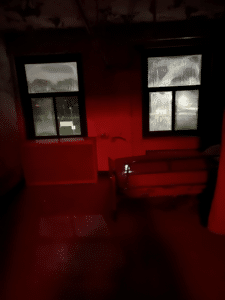
Not all of our experiences occurred in areas associated with a named individual. During the 2022 investigation, team members reported seeing a full-body figure in a hallway. The majority of the group reportedly witnessed the moment, but it was not captured on camera. In a separate incident, a photograph of a dark room appeared to show a shadow-like shape in a corner.
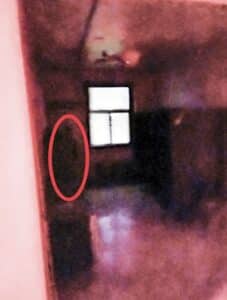
These observations were memorable to those present, but the full-body figure remains an uncaptured personal experience, and the photograph does not establish the identity or nature of the shape. Both are worth documenting as part of the investigation, while keeping them separate from evidence that can be independently reviewed.
Overall Assessment of the Location Evidence
Across the three investigations, the chapel and atrium produced apparent communication during our early visits, while the 2022 investigation generated more involved sessions in Mary Virginia’s room, Angelo’s room and hallway, the third-floor nurses’ station, and other areas.
The evidence was not consistent in every room or on every visit. Some sessions produced apparent responses, while others yielded little or nothing noteworthy. That variation is an important part of the record and should not be overlooked simply because a location has a reputation for activity.
Our goal is not to assign every sound, word, shadow, or equipment response to a particular individual. It is to document what occurred, compare the available material, and allow readers to review the evidence before drawing their own conclusions.
Looking at the Evidence as a Whole
Across our three investigations, the chapel and atrium drew our attention during the earlier visits, while our 2022 return produced several different types of material, including flashlight activity, device responses, an SLS image, knocks, audio anomalies, and unusual light-like appearances.
Some observations were recorded; others were personal experiences or interpretations made during the investigation. That distinction is important. A sound can be clearly recorded without its source being known, and a device response can occur without proving that an external intelligence caused it.
Our goal in presenting these examples is not to tell readers what they must believe. It is to make the material available for review, explain why we found it noteworthy, and remain open to explanations that the evidence may or may not support.
Patterns Across the Three Investigations
Investigating Hillview Manor on three separate occasions gave us an opportunity to compare our experiences over time rather than relying on a single visit. Although each investigation had its own areas of focus and results, reviewing them together helps provide a broader picture of what we documented at the location.
It is important to distinguish between activity that appeared to repeat, observations that occurred during only one investigation, and experiences that could not be independently verified. Similar reports across different visits can be worth examining, but they do not automatically establish a shared cause or paranormal origin.
Different Visits, Different Results
One of the clearest observations from our three investigations is that the results were not consistent across every location or visit.
During the 2017 investigation, some areas produced little or no notable evidence. Our 2018 return generated additional spirit-box material in selected locations, while other rooms remained relatively quiet. By 2022, our investigation included a broader mix of tools and recording methods, producing observations such as flashlight activity, Phasma Box responses, an SLS image, knocks, and unusual sounds or light-like appearances.
This variation matters. If a location is associated with reports of unusual activity, that does not mean activity will be observed every time it is investigated. Nor should a quiet session be treated as a failure. Recording an absence of notable activity is part of documenting the location honestly.
Recurring Reports Versus Recurring Evidence
Hillview Manor has a reputation built partly on stories associated with specific former residents and rooms. During our investigations, we considered those accounts when deciding where to focus our attention. However, a reported history and a recorded observation are not the same thing.
A sound captured in a room associated with a particular person does not establish that person’s identity. Similarly, a spirit-box response that resembles a name, or a device that produces a human-like figure, cannot independently confirm who or what may have caused it.
For that reason, we separate three things in our records:
- Historical information and reported stories: Accounts associated with Hillview Manor and its former residents.
- Documented observations: Sounds, images, instrument readings, and device activity recorded during our investigations.
- Interpretations: Possible meanings or explanations considered by our team after observing the results.
Keeping these categories separate helps prevent a compelling story from influencing how we interpret ambiguous evidence.
What Repeated, and What Remained Uncertain?
Across the three visits, the chapel and atrium were areas of interest during the earlier investigations, while the 2022 return produced additional material in rooms and hallways using different tools. Some observations were captured on recording equipment, while others were personal experiences or interpretations made at the time.
We did not establish a single explanation that accounted for all of the activity reported or recorded across the three investigations. We also did not obtain consistent results in every location, and some observations remain ambiguous.
The most useful outcome of revisiting Hillview Manor is not simply a list of unusual events. It is the opportunity to compare what we recorded, identify which observations can be reviewed, recognize where results differed, and remain honest about what the evidence does and does not establish.
Final Assessment: What We Can and Cannot Conclude
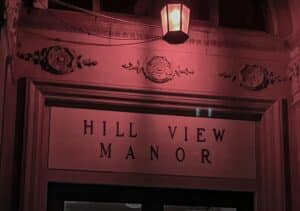
Our investigations of Hill View Manor on May 7, 2017, August 11, 2018, and June 10, 2022, provided three separate opportunities to document activity throughout the former county home. Across those visits, our team explored reported hotspots, reviewed the building’s history, and used a range of investigative equipment to record sounds, visual anomalies, environmental observations, and possible responses during sessions.
Some locations drew our attention more than once, including the chapel, atrium, Mary Virginia’s room, Anna’s room, Angelo’s room, and areas of the third floor. However, the activity was not consistent from one visit to the next. Some sessions produced material that appeared potentially significant, while others offered little that could be interpreted with confidence.
That inconsistency is an important part of the story. Returning to a location does not guarantee the same experience, and a location’s reputation does not establish the cause of something recorded there.
What Stood Out
Several pieces of evidence from these investigations warranted closer review. Spirit-box sessions produced words or phrases that seemed relevant to the conversations taking place. Flashlight sessions included changes in the light’s state. SLS sessions displayed a figure-like mapping, while audio and video recordings captured sounds and visual details that attracted our attention.
These observations are worth documenting, but their interpretation requires care. A word heard through a spirit box does not, by itself, establish communication. A light changing state does not establish what caused the change. A figure displayed by mapping equipment does not independently confirm the presence of a person or entity. Likewise, an unusual sound or shape in a recording may have more than one possible explanation.
The value of this material lies in preserving the original observations, identifying the circumstances in which they occurred, and allowing others to review the evidence rather than presenting an interpretation as a proven fact.
The Importance of Historical Context
Hill View Manor’s history provides an essential backdrop to these investigations. The building’s former use, the people associated with its history, and the stories told about particular rooms all influence how investigators and visitors approach the location.
Historical context can help guide an investigation and identify questions worth exploring. It can also influence what people expect to experience or believe they recognize during an investigation. For that reason, we consider historical records and reported experiences alongside the evidence, while keeping those categories separate.
A name or phrase that appears to match a local story may be interesting, but the connection should not be treated as confirmation without independent support. The same standard applies when an observation seems to resemble something reported by a previous visitor or investigation team.
What Remains Uncertain
Across three investigations, we documented material that our team considered unusual or worthy of further examination. However, the available observations do not establish a single explanation for everything recorded at Hill View Manor.
Some evidence may be consistent with a paranormal interpretation, but consistency with an interpretation is not the same as proof. Environmental conditions, equipment behavior, recording limitations, perception, and other ordinary explanations must remain part of the evaluation wherever they are relevant.
We also cannot conclude that every reported experience at Hill View Manor has the same cause, or that activity associated with one room explains activity elsewhere in the building. Each recording and observation needs to be considered on its own merits, with its context and limitations taken into account.
The absence of a definitive explanation does not automatically make an event paranormal. It means that, based on the available information, the explanation remains unresolved.
Our Conclusion
Returning to Hill View Manor in 2017, 2018, and 2022 allowed us to build a broader record than any single investigation could provide. The three visits offered opportunities to compare locations, revisit reported areas of interest, and examine evidence gathered under different circumstances.
What we can confidently say is that our team documented a collection of observations and recordings that we believe deserve careful review. What we cannot confidently say is that those observations prove the presence of spirits or establish the identity, intentions, or nature of any alleged entity.
For Iron City Paranormal, an investigation is not about forcing every unexplained event into a paranormal explanation. It is about asking questions, preserving what was observed, considering alternative possibilities, and being transparent about what the evidence can and cannot tell us.
Hill View Manor remains a location with a significant history, many reported experiences, and material that invites further examination. Our three investigations add to that record, but they do not close the case.
We approach every investigation with respect, research, and an open mind, allowing the evidence to speak for itself while recognizing that some questions may remain unanswered.
What did you think?
Drop a comment below.